Molding Methods
Our Molding Processes
Each process is suited to different alloys, casting sizes, and production volumes. Our engineers select the right method for your application.
 Precision
No Bake Molding
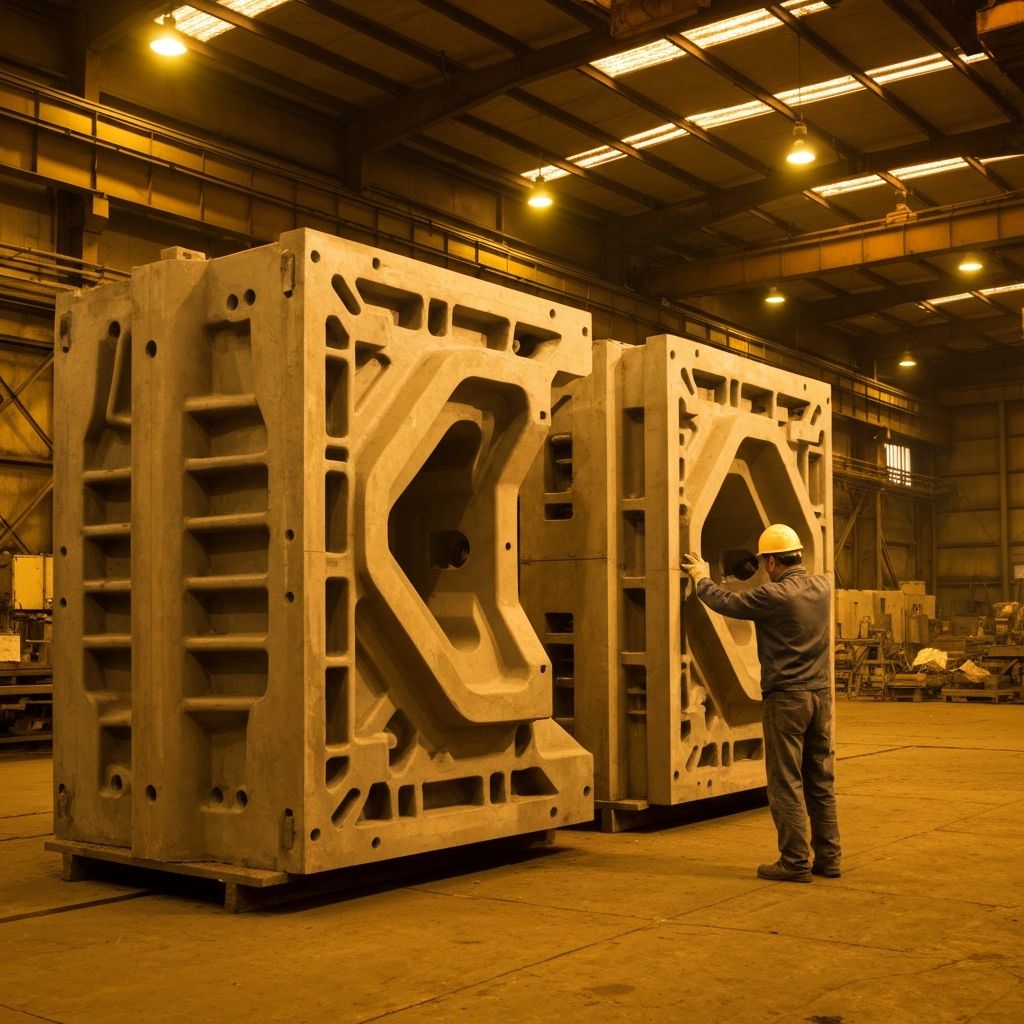
Chemically bonded sand molds for superior dimensional accuracy and surface quality on complex, large, or critical castings. The preferred process for nickel alloys, Monel, and demanding bronze work.
- Superior dimensional tolerances
- Complex internal coring
- Excellent surface quality
- Best for 50 lbs and up
High VolumeGreen Sand Molding
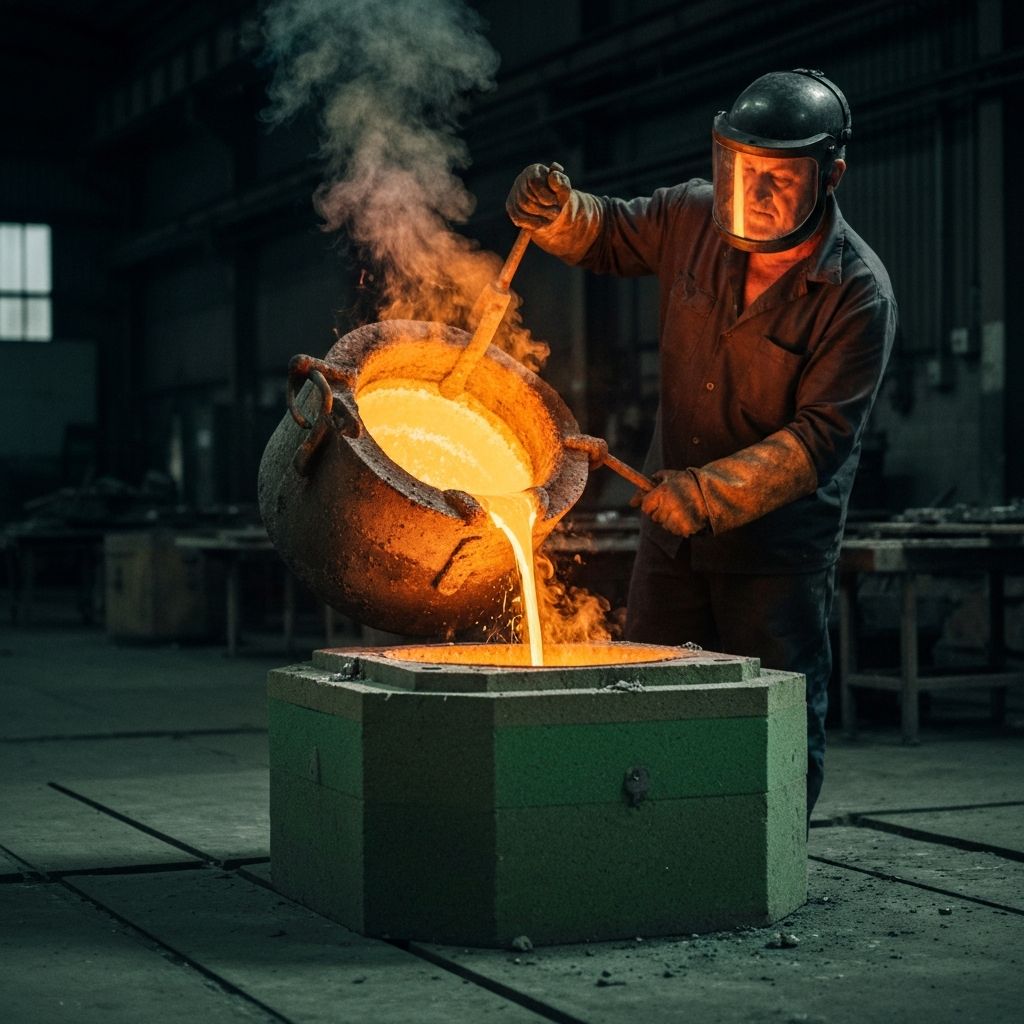
Traditional clay-bonded sand molding for cost-effective, high-volume production of bronze, aluminum, and iron castings. Fast cycle times and low tooling cost make green sand the workhorse process for most standard production work.
- High production rates
- Low tooling cost
- Best for repeat production runs
- Weights from ounces to 1,000 lbs
 Prototype
3D Sand Molding
Binder-jet 3D printed sand molds and cores eliminate the need for physical patterns — ideal for prototype castings, short runs, and complex internal geometries that are impractical to core conventionally.
- No pattern tooling required
- Complex internal passages
- Rapid prototype delivery
- First-article in days, not weeks
Why Ironbound
Full-Service Molding Capability
From first prototype to full production run, our molding department handles every step under one roof.
Multiple Molding Processes
Green sand, no bake, and 3D sand molding under one roof — the right process is selected based on alloy, geometry, quantity, and specification requirements.
In-House Pattern Shop
All patterns are built and maintained on-site in our pattern shop. Wood, resin, and match plate tooling for production quantities; 3D printed cores for prototypes.
Full Alloy Range
Our molding capabilities support bronze, aluminum, nickel alloys, Monel, and specialty alloys across both green sand and no bake processes.
Navy & ASTM Ready
Mold qualifications and process controls in place for Navy MIL-SPEC and ASTM casting requirements from initial engineering review through production delivery.
Specifications